
Head Strap: Essential Gear for VR Fitness
I remember my first full VR boxing session with the stock Quest 2 strap. After 10–15 minutes, the headset began to shift, my neck grew sore, and the constant adjustments shattered my immersion. During high-intensity movements, the headset would slide, refusing to stay secure. After three months of vigorous workouts, the fabric straps finally gave out. That’s when I learned: for intense VR fitness, a specialized head strap isn’t a luxury, it’s essential.
A great strap preserves the illusion of immersion, keeps the lenses fixed in front of your eyes, and turns a shaky experience into a solid one. It’s about more than comfort, it’s about stability, safety (so the headset doesn’t become a projectile), balance (countering the front-heavy design), and hygiene (managing sweat).
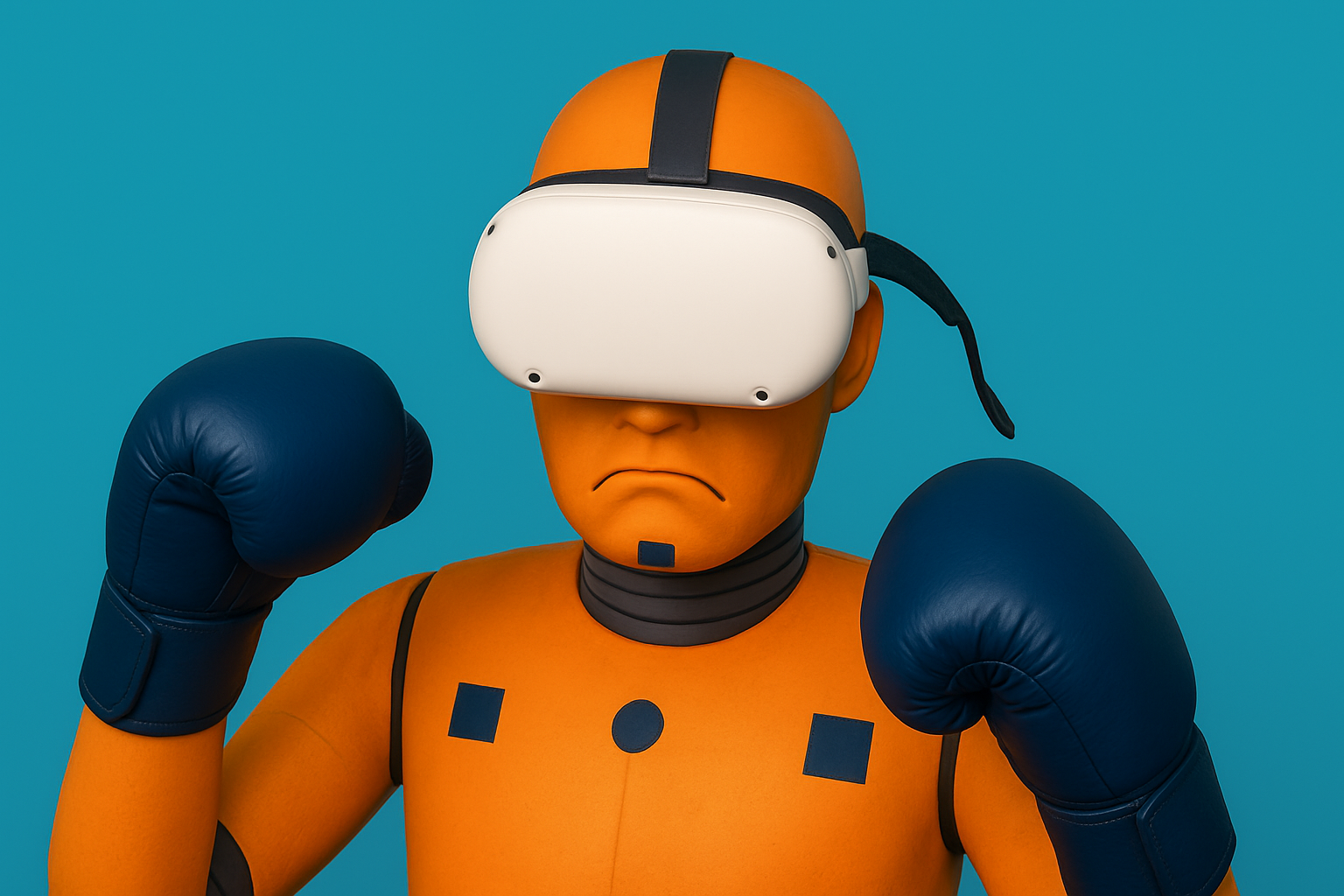
In this article, forged in the heart of my Mad Scientist Lab, I’ll cover strap types, my personal experiments, what worked best, and key advice for anyone building a VR fitness routine. As always, no test subject… ahem… test dummy was harmed (well, not seriously) during these experiments. Let’s dive in.
Head Strap: Why the Stock Version Fails the Fitness Test
The default soft strap is a compromise, designed for affordability and ease of packaging, not for dynamic movement. It lacks rigid support, forcing you to overtighten to prevent slippage, which leads to pressure points and “VR face.” During intense sessions, it shifts constantly, disrupting focus and forcing you to break flow to readjust. For anything beyond sedentary viewing or light gaming, it becomes the weakest link in your setup.
What to Look for in a VR Fitness Head Strap
- Secure, Stable Fit: Must lock firmly without excessive pressure, eliminating shift during jumps, ducks, and rapid head turns.
- Superior Comfort for Long Sessions: Padded, ergonomic design that distributes weight evenly, preventing neck strain and hot spots.
- Hygiene-Friendly Materials: Removable, machine-washable pads or easy-to-wipe surfaces are crucial for managing sweat. Gently wipe the lenses with a clean, dry microfiber cloth to maintain optimal clarity and prevent scratches.
- Counterbalanced Design: A rear battery or padded knob offsets the front-heavy weight, improving overall balance and reducing fatigue.
My Head Strap Experiments in the Mad Scientist Lab
My Lab became a testing ground for stability and sweat. Think beakers, fans, a treadmill set to “questionable,” and a couple of old crash-test-dummy heads mounted on sticks wearing various straps while I blasted them with leaf blowers. Here’s what I discovered:
The Stock Strap: Served briefly, but required constant re-tightening and eventually broke at the weak points, a quick Lab repair with crazy glue was only a temporary fix. Even my test dummy (codename: Sweaty Steve) couldn’t keep it on during a simulated workout. It was clear: this wasn’t built for the strain of daily workouts.
Elite-Style Strap (My Winner – Kiwi Design): This rigid halo-style strap was the game-changer. It features a rear dial to cinch it securely to your head, a padded top strap, and ample cushioning. At first glance, it looked like a medieval torture device, the kind of thing a knight-in-training might fear during helmet fittings. But once on your head, the reality was the opposite. The weight disappears; it’s like sitting on clouds.
Over a year later in the Lab, it remains durable, comfortable, and perfect for games with lots of head movement. For boxing and golf, it’s one of my most crucial accessories, alongside my Kiwi grips. The headset feels like a part of my face, stable, focused, and forgotten. Even my lab assistant (another test dummy, Calm Carl) passed the “shake test,” surviving violent head movements without flinging the headset into orbit.
When the Stock Head Strap Might Suffice, And When to Upgrade
The stock Head strap is acceptable for watching movies or playing stationary games. The moment you plan to incorporate intense VR fitness, boxing, rhythm games, or any high-movement activity, an upgrade is non-negotiable. For golf simulators, where stability is key to a consistent swing, a rigid Head strap is also a major improvement.
Budgeting Advice: You don’t need the most expensive option. Prioritize a well-reviewed rigid strap with good padding, an adjustment dial, and washable interfaces. This investment pays dividends in comfort, performance, and headset longevity. For me it was the Kiwi one.
Conclusion
Investing in a proper head strap transforms your VR fitness experience. It improves comfort, enhances workout effectiveness, protects your headset from damage, and ultimately preserves immersion. If your Quest 2 shifts during use, I strongly recommend making the upgrade. It’s one of the most impactful gear decisions you can make.Now, I turn the experiment over to you: what was your breaking point with the stock Head strap? What have you learned in your own Mad Scientist Lab? Share your experiences and findings in the comments below.
I tested out these fitness app so you don’t need too, check it out
AFFILIATE DISCLOSURE
A quick word from our sponsors (aka, my wallet): As an Amazon Associate, I earn from qualifying purchases. This means if you click a link on my blog and buy something, I may earn a small commission at no extra cost to you. I only recommend products I personally own, use, and love. If I recommend a product I haven’t personally tested, I will always clearly state that. Transparency is key, both in fitness and in business.