
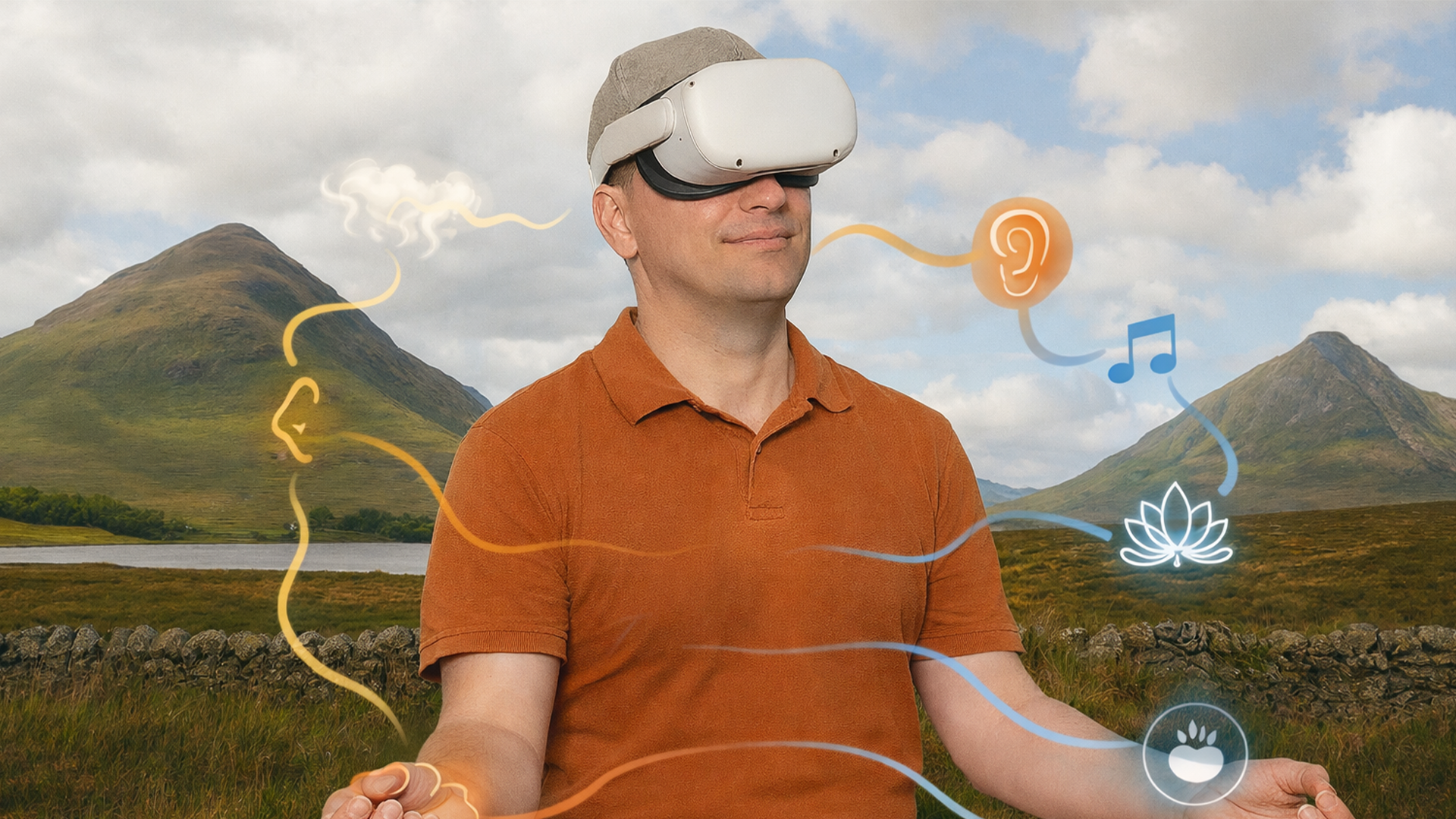
Why I bought a Quest 2? Solution was simple: VR fitness.
I saw Supernatural, boxing, dodging orbs, punching through virtual obstacles, and thought, this is perfect to get back in shape. I work from home, and during winter I basically turn into a hibernating hobbit. Will, my assistant beaver, and I talk about this often. Yes, I speak to animals. Don’t judge.
VR fitness helped me get my energy back. For VR fitness beginners, the surprises start fast and never really stop. Only when I’m consistent do I see real results. For me, that means at least three sessions a week. Note to self: after I finish writing this, I’m jumping into the headset for a quick workout.
I’ve been doing VR fitness for over two years now. I’ve lost some fat, I sweat a lot, and my heart rate definitely gets up. It’s great cardio, but more importantly, it’s fun. Instead of sitting on an exercise bike watching TV, you’re fully immersed. You get power scores, accuracy scores, performance feedback. It becomes a game.
One big realization hit me early: I was lacking energy. As a forty-nine-year-old male, that’s really what I’m chasing now, energy. When you start realizing there are fewer days ahead than behind you, health suddenly becomes a priority.
VR fitness also showed me what I need to work on: warming up properly, stretching with intention, and more recently, building stronger triceps. I’ve started doing a short strength workout before VR boxing, and the difference is noticeable.
I’m planning to turn this routine into a downloadable infographic and newsletter after the new year.
Will, don’t forget this.
Will nods.
Quick disclaimer: I’m not a fitness expert, just a self-appointed fit guru. Everything here is based on personal experience after two years inside the headset. I started this blog to help VR fitness beginners navigate the learning curve, because it can be confusing at first.
GRIP FATIGUE WAS THE FIRST THING I NOTICED
Yes, this is a real thing.
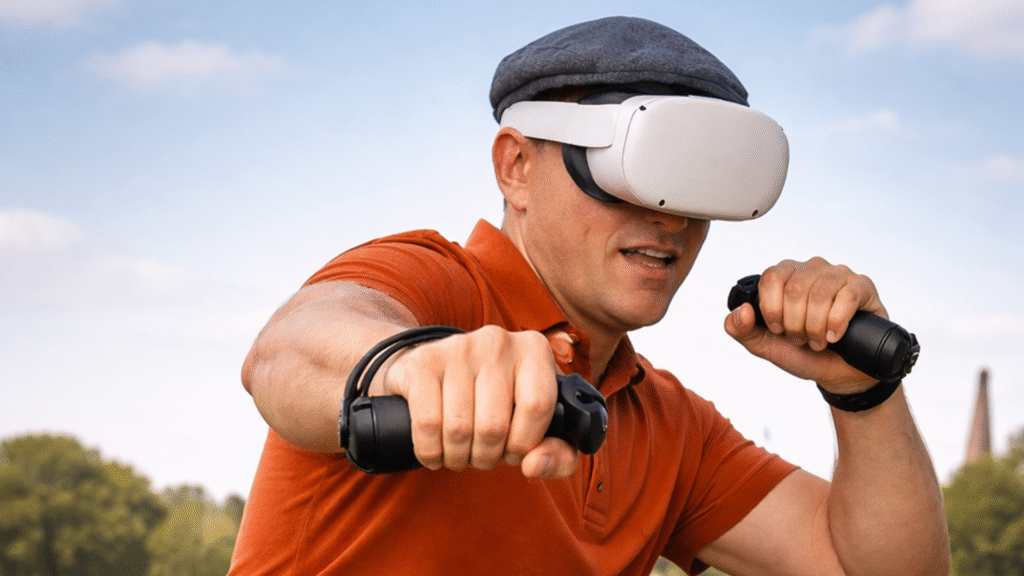
For VR fitness beginners, grip fatigue is the first surprise. I started paying close attention to how I held the controllers. I tried everything: all fingers wrapped, index finger out, light grip, tight grip, every variation imaginable.
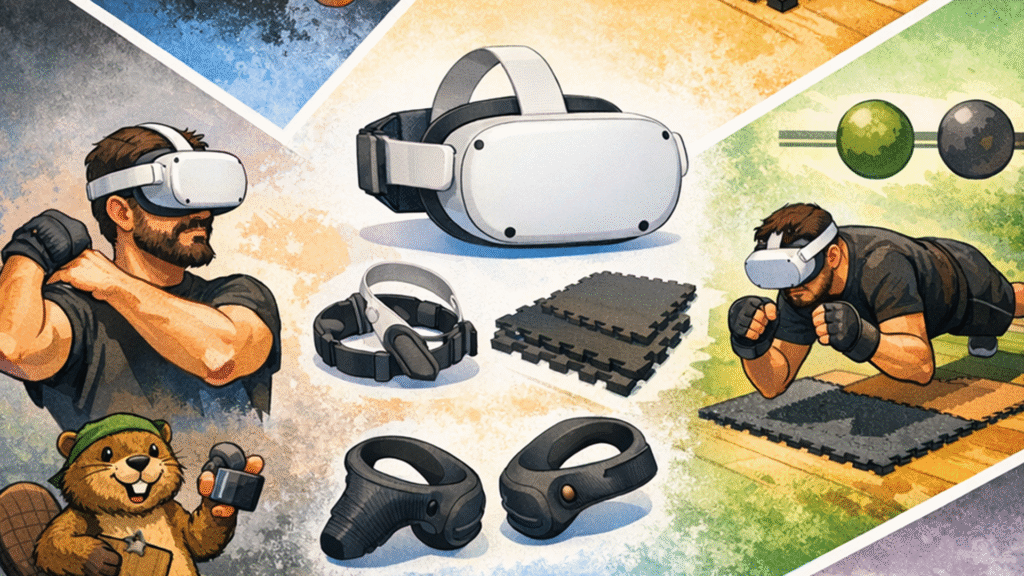
What helped the most was switching to KIWI controller grips. They let me relax my hands instead of death-gripping the controllers. Less grip tension meant less fatigue and less wasted energy, and the difference was immediate.
Right now, my biggest challenge is triceps fatigue. Halfway through a session, punching gets harder, but I keep going. I stretch, eat well, and stick to my routine. Little by little, improvement comes.
Those multiple orb volleys in Supernatural? Brutal. Will could hear me grunting from my VR cubicle and knew something was wrong.
Part of the fatigue was gripping too hard, but controller weight adds up too. A few ounces doesn’t sound like much, until you’ve been punching nonstop for thirty minutes. Loosening my grip with better controller straps helped a lot. Time will tell how fast the triceps adapt.
BALANCE ISN’T AS SIMPLE AS I THOUGHT
This one surprised me, and it surprises most VR fitness beginners too.
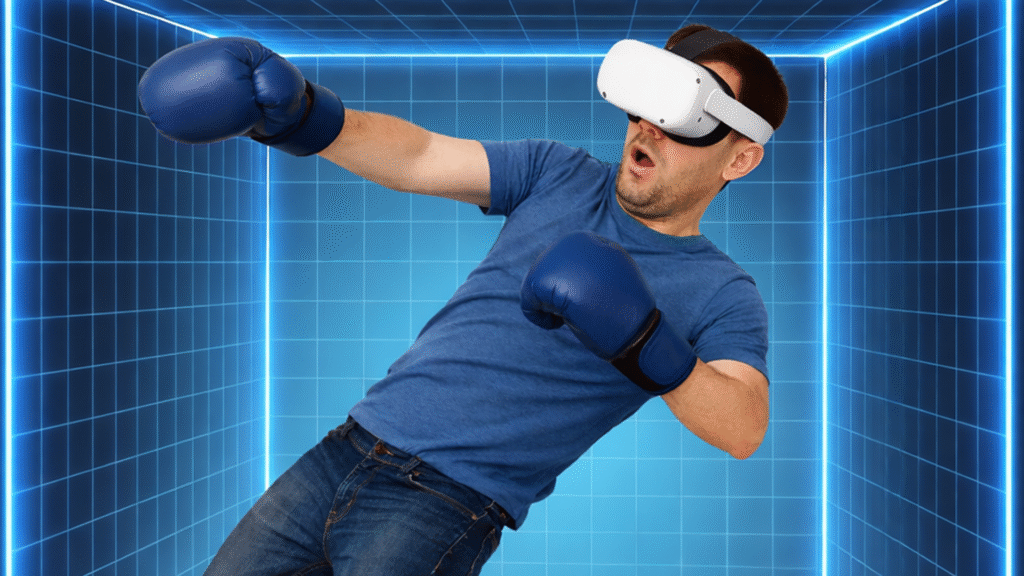
When you start turning 360 degrees during VR boxing, balance becomes very real, very fast. There’s a movement I call the merry-go-round, and if I’m not careful, I can easily get off-center.
Whether I’m in orthodox or southpaw stance, my front foot defines my balance point.
The scariest moment? Uppercutting my own headset because I wasn’t fast enough to react to orbs flying in from the sides. That was a wake-up call.
You do adapt, but you have to train for it. Balance matters, and a strong core helps. I do planks, about one minute max. That’s my limit right now.
Punches come from the hips and legs, but balance comes from the core. I’m no boxing expert, just a backyard experimenter who tests things, observes results, and makes Will take notes. If something catches fire, we put it out and try again. No beavers were harmed.
I also use interlocking foam floor mats. They give me a physical boundary in my VR space. If I drift, I feel it immediately. That simple cue keeps me grounded and centered.
MY DOMINANT SIDE SHOWS UP IMMEDIATELY
Most VR fitness beginners are right-handed like me, so orthodox stance feels natural at first. What I like about Supernatural is that it forces you to switch sides. Both sides get trained, no cheating.
At first, it was confusing. Black orbs, white orbs, fast patterns. But you adapt quickly.
Training both stances works your entire body. Still, when I’m in orthodox stance, I go all in. Will sometimes thinks I’m fighting an invisible monster in there.
Supernatural does a great job balancing both sides throughout each workout. You can’t favor one side, the system won’t let you.
SHOULDER TIGHTNESS TAUGHT ME ABOUT WARMING UP
This is a lesson most VR fitness beginners learn the hard way.
Earlier, it was shoulder tightness. Now it’s more triceps fatigue. But shoulder issues usually came from skipping warm-ups. These days, I spend ten minutes just doing shoulder circles and loosening everything before starting.
VR workouts engage small stabilizing muscles you didn’t even know you had, along with the big ones. It’s like wearing light wrist weights for thirty minutes straight. Your shoulders, forearms, and upper back never fully rest.
The closest comparison I have is using a computer mouse all day. Same small movements, over and over. Without stretching, your body eventually complains.
Adjusting my KIWI Quest 2 head strap also reduced shoulder tension. Weight distribution matters more than you’d expect.
FATIGUE SHOWS UP BEFORE PAIN
VR fitness beginners almost always notice neck fatigue first.
Switching to a KIWI head strap was a game changer. It stabilized the headset and distributed the weight across my head instead of pressing into my face.
When fatigue shows up, it’s your body sending a warning, before pain arrives.
Right now, I feel fatigue in my left triceps, so I adjust: more stretching, better warm-ups, lower-intensity sessions. Small doses, slowly building stamina.
I also started using a VR facial mask. Less sweat means fewer distractions, better form, and less compensating with other muscles.
VR SHOWS YOU EVERYTHING, NO CHEATING ALLOWED
VR fitness beginners quickly discover you cannot fake effort in VR.
You’re not scrolling your phone on a treadmill. You’re fully engaged. Every flaw shows up immediately, timing, technique, body mechanics.
After three months of VR boxing, I thought I was crushing it. High scores, great stats. Then I filmed myself with my phone.
Yeah… not quite.
I was arm-punching, no hip rotation, no body movement. Once I saw it, I fixed it and improved. I should probably post a boxing clip on Instagram one day. Will can film it.
The gym still matters. Strength training builds discipline and power. VR fitness keeps you active, consistent, and energized, especially when working from home.
VR shows you what needs improvement immediately. You either accept it, or you get to work.
FINAL THOUGHT
The biggest lesson? Consistency matters. SAY IT WITH ME CONSISTENCY.
My routine looks something like this: wake up, coffee, banana, work, dinner, maybe some fresh air if winter allows, write, design, then VR boxing. That’s the condensed version.
So on that note, I’m jumping back into the headset.
Stay consistent. Stay healthy. And just show up. That is the most important thing VR fitness beginners need to hear before they start.
YOUR TURN
What did VR fitness make you aware of about your body?
I tested these VR apps so you don’t need too, check it out
Let me know in the comments. I read every one.
AFFILIATE DISCLOSURE
A quick word from our sponsors (aka, my wallet): As an Amazon Associate, I earn from qualifying purchases. This means if you click a link on my blog and buy something, I may earn a small commission at no extra cost to you. I only recommend products I personally own, use, and love. If I recommend a product I haven’t personally tested, I will always clearly state that. Transparency is key, both in fitness and in business.