
Affiliate Disclosure: This post contains affiliate links. I may earn a small commission at no extra cost to you. I only recommend products I personally own and use.
Why Low-Impact VR Fitness Starts With Listening to Your Body
At 50, you start thinking about your body a little differently. Not in a negative way, but you become more aware of what hurts and what feels normal. The knees, the shoulders, the lower back. They all start sending little signals when something is slightly off. At this age, you basically become your own body whisperer. You have to.
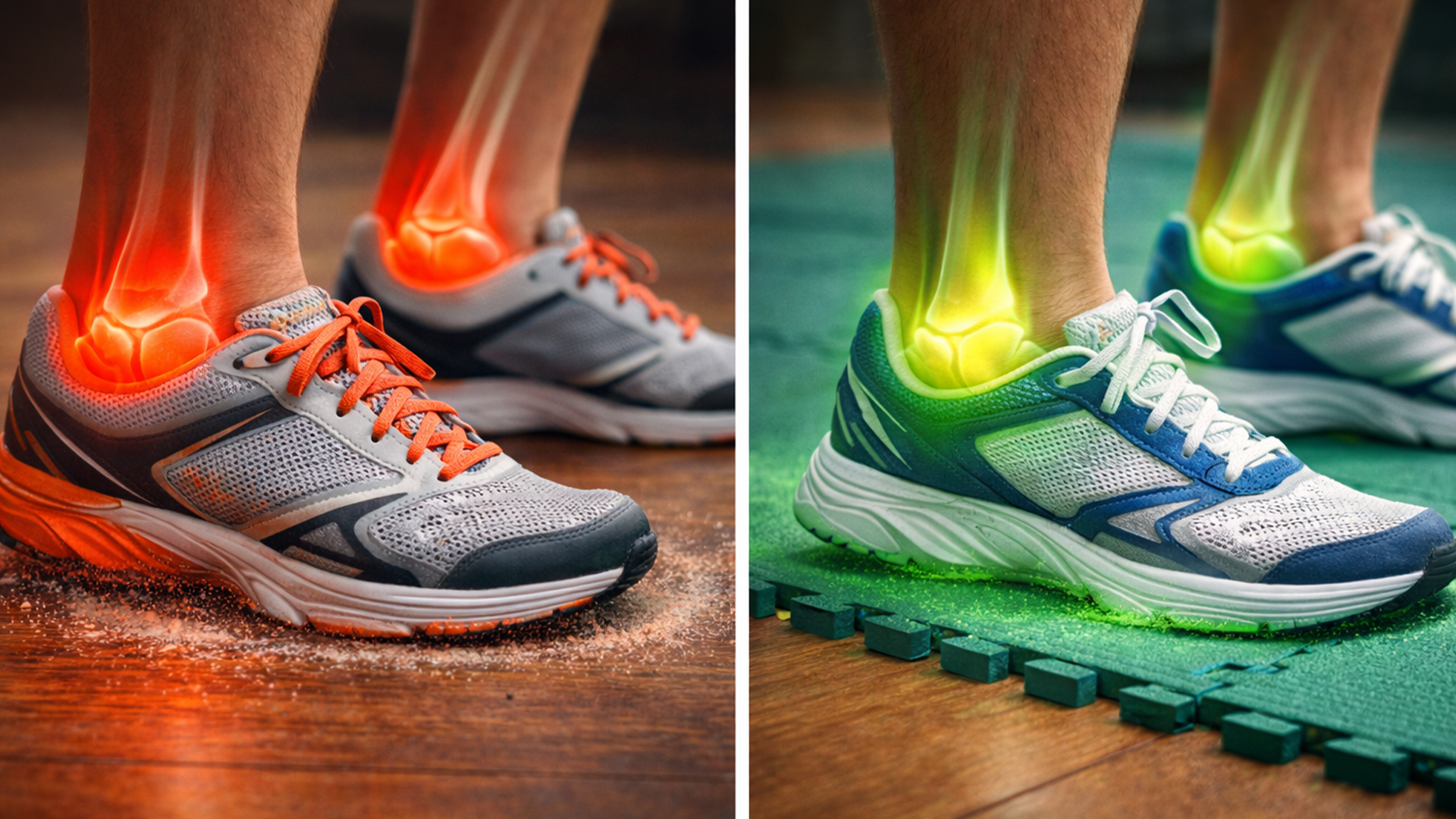
The moment that changed how I looked at my fitness routine was incredibly simple. I was doing VR boxing workouts on a hard floor and felt a small twinge in my knee during a lateral movement. I went out and bought padded interlocking gym mats and slid them under my feet.
That was it. One small change, but it was massive.
The impact I did not even realize I was absorbing just disappeared. My knees felt better on every shift and dodge. It was like adding a layer of forgiveness between me and the ground. That adjustment taught me something important about staying active as you get older. Low-impact VR fitness is not always about doing less. It is about doing things smarter and actually listening to what your body is telling you.
Why Low-Impact VR Fitness Feels Different From the Outside
From the outside, VR boxing looks intense. To anyone watching you in the living room, you look like a madman. Moving fast, sweating, reacting, throwing punches at thin air. It looks chaotic because it is. What most people do not realize is that it is actually faster than it looks from the outside.
But from the inside, the experience is completely different.
It feels a bit like punching underwater. Your arms are always moving, always working, but there is no hard impact at the end of the swing. No heavy bag snapping back at your wrist. No feet pounding into a treadmill over and over. Each punch goes through the motion and you pull it back to your guard. No shock traveling into your elbow or shoulder.
That is the key difference between this and traditional cardio or combat training. You still get the intensity. You still get the sweat and the elevated heart rate. But you are not stacking impact on your joints with every single movement. And because you are the one at the controls, you decide how hard to push and when to back off. That level of control is exactly what makes a fitness habit sustainable for the long haul.
How Low-Impact VR Fitness Teaches You to Move Better at 50
Once I had the floor sorted, I started paying attention to how I actually punched. When you are in the headset and the music is pushing you, it is easy to get carried away. You want to throw everything as hard as possible because it feels heroic.
I stopped doing that.
I shifted my focus to what I now call controlled chaos. I stopped overextending. Stopped snapping my arms out to full reach like I was trying to break a whip. That shift alone took a massive amount of pressure off my elbows and shoulders. Now I use about 70 percent of my power, with the rest going into control and focus. I am like a tiger ready to pounce. The intensity is there, but it is measured.
Controlled punching also forces you to stabilize through your core. You cannot throw a clean punch using just your arm. You have to engage your whole body to stay balanced. The result is a better workout and far fewer mystery aches the next morning. That is the whole point of low-impact VR fitness done right.
My stance matters too. Feet shoulder width apart, knees slightly bent, body loose but ready. I keep a small bounce in my legs so I never feel stiff or locked up. When I throw a punch, I rotate my whole body instead of just swinging my arm. That one technique shift takes the pressure off my lower back and knees. Moving stiffly, especially bending from the lower back with locked knees, is where strain builds up over time. Being loose is not the same as being sloppy. It means being in total control of the motion.
Specific Tips for Low-Impact VR Fitness for Joint Health
Even with good form, certain areas still need attention during low-impact VR fitness.
Shoulders do a lot of work because of the sheer volume of punches over a session. The fix is staying controlled and avoiding that arm lockout at full extension. Your lower back can feel it if you are twisting without engaging your core. You have to rotate as a unit, not just spin your spine.
Wrists and elbows can get tired from holding the controllers and snapping punches repeatedly. Relaxing your grip slightly and focusing on smooth, fluid movement solves that fast. When you stop tensing up, everything feels more fluid and responsive. Your joints stop fighting against tight muscles, which usually means less of that cracking and popping every time you move.
Knees come into play on any squat or lateral weight shift. Soft stance plus padded flooring makes a real difference there. Even your neck can feel the weight of the headset after a long session. Good posture and staying relaxed is the answer.
None of this is complicated. It just takes a bit of internal awareness while you are in the session.
The Warm Up That Made Low-Impact VR Fitness Sustainable
About three months ago I dealt with a small oblique strain. Nothing serious, but enough to make me rethink how I was starting my sessions. Since then, my warm up is non negotiable.
Before the headset goes on, I do some breathing, light stretching, and a few squats to wake up my lower body. Basic stuff, but it works.
Will the Beaver had thoughts on this, naturally.
“Sean, you do not just grab a cold rubber band from the junk drawer and stretch it as far as you can. That is how things snap. You warm it up first, get it flexible, and then you use it.”
He is right, in his own beaver way. A proper warm up increases blood flow, loosens the joints, and prepares your muscles for the work ahead. It is a small habit, but I feel the difference twenty minutes into every session.
The Mental Side of Training Low-Impact
This is the part I did not expect. When you know a workout is not going to punish your joints or leave you limping the next morning, you approach it with a completely different mindset.
There is no hesitation before you start. No sitting on the couch wondering if your knees can handle it today or what might hurt tomorrow. You just go. That mental shift alone makes it dramatically easier to stay consistent. And consistency is where the real results actually live.
VR fitness makes the movement fun. The low-impact approach is what makes low-impact VR fitness sustainable for someone my age.
Who This Type of Training Is Really For
This works for anyone who wants to stay active but is starting to feel the small physical limitations that come with time. Bad knees do not mean you stop moving. They mean you need a smarter approach that respects those knees.
If you feel like you are too old to start a fitness journey, you are not. You just have to work with your body instead of fighting it or even better listening to it. Even coming back from a minor injury, VR fitness gives you full control over how hard you push and when to ease off.
What VR Fitness Will Not Fix
Being honest here. VR fitness is not magic.
It will not fix bad form. If you move like an elephant walking on hot coals, take a second to picture that, you can still create strain and get hurt. It will not replace strength training either. Lifting still has its place in a balanced routine.
Most importantly, it will not prevent injury if you ignore what your body is telling you. The technology is just a tool. You are still the one doing the work.
Why Staying Active at 50 Is Worth Figuring Out
Staying active at this age is not about chasing a perfect physique. It is about feeling good in your own skin and having the energy to actually live your life.
VR fitness has done more for me than improve my physical stats. It has helped my energy, my mood, and my overall mindset. After a good session I feel strong, focused, and clear headed. That matters more to me now than it did twenty years ago.
Will the Beaver summed it up in his usual way. He said if humans patched their own frames with the same focus they use scrolling those little glowing rectangles, they would move with the grace of a well oiled lodge instead of a pile of dry brush. He would also remind you that even beavers have to be careful with their joints. Blow out a tail joint whacking a log or strain a shoulder hauling timber, and the whole dam suffers.
Start slow. Stay controlled. Get a floor mat or really comfortable shoes. Listen to what your body is telling you.
You might be surprised what you are still capable of.
Sean’s Corner
Materials you might find useful:
5-Minute VR Fitness Warm-Up Routine (Prevent Injuries at 50+)
Is VR Fitness Safe for Seniors Over 50? What I Learned After 2 Years
What Are the Most Effective Boxing Techniques in VR After Two Years of Training?
The gear I use:
- Meta Quest 2/Quest 3 (check current price) – My VR headset
- 15lb Kettlebell (check current price) – For warm-ups before VR boxing
- VR Anti-Fog Spray (check current price) – Keeps lenses clear during cardio
- VR Face Cover (check current price) – More comfortable for long sessions
Floor Fan (check current price) – Helps with fogging and cooling