
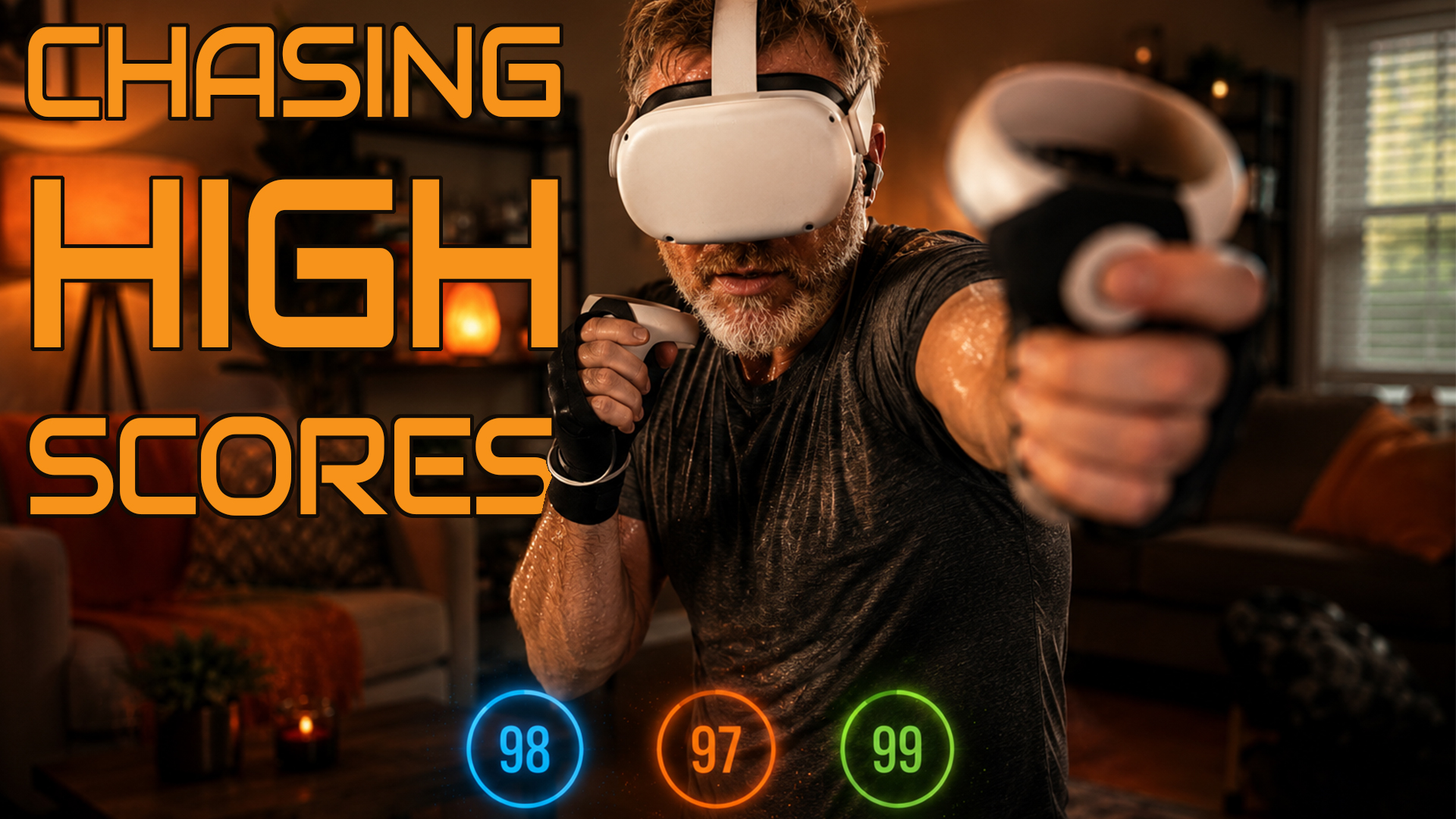
The Moment VR Fitness Progress Stopped Being Accidental
I didn’t expect VR fitness progress to come down to chasing numbers on a screen.
I thought I’d throw on my Meta Quest 2-3, swing my arms around like a madman, sweat a bit, and call it a win. That was the plan. It was a lazy plan, but it was mine.
Then Supernatural boxing humbled me.
It wasn’t a gentle correction. It was more like a slap in the face with a sweat-soaked glove. At first I was just trying to survive the workouts without my lungs collapsing. Then I noticed the scores. Accuracy. Power. Movement speed. That’s when everything shifted. Suddenly I wasn’t just working out. I was hunting something. And that hunt changed my VR fitness progress more than anything else I’ve done in my living room.
A quick word from our sponsors (aka, my wallet): As an Amazon Associate, I earn from qualifying purchases. This means if you click a link on my blog and buy something, I may earn a small commission at no extra cost to you. I only recommend products I personally own, use, and love. If I recommend a product I haven’t personally tested, I will always clearly state that. Transparency is key, both in fitness and in business
The Workout Where I Finally Stopped Coasting
The moment this clicked wasn’t pretty.
I was in a medium difficulty boxing session, already breathing like I’d just carried three bags of heavy groceries up a flight of stairs, and I have long stairs. The game throws colored orbs at you and expects you to hit them clean. It sounds simple. It really isn’t.
Three pillars stare you down the whole time. Accuracy is how clean you hit. Power is how hard you punch. Movement speed is how fast you transition between strikes. At first I got obsessed with mastering all three at once. Big mistake.
That day I locked in on movement speed. I wanted to hit a 6. My best was 5.9. That 0.1 difference was close enough to be genuinely annoying. Somewhere in the middle of that session I stopped thinking about form or technique. I was chasing that number like it owed me money. I punched faster. I reset my stance faster. I didn’t think, I just went.
That’s when I realized I wasn’t coasting anymore. I was pushing way past my normal effort just to move one tiny digit. That’s where VR fitness progress actually happens, usually when you’re too distracted to notice the pain.
Why the Scoring System Gets Under My Skin
The score system in Supernatural isn’t some random number generator designed to make you feel good. It tracks how fast your hands move, how clean your punches land, how quickly you recover. It compares all that data to your last 20 workouts and spits out a percentage. Smart, but also incredibly irritating.
I finished a session at 90 percent once and felt annoyed. Not proud. Just mad about the 10 percent I left on the table. Then 95 came. Better, but not enough. Then 98, and suddenly I’m thinking like a crazy person, why not 99?
On a medium playlist, hitting 99 makes me assume I messed something up or the sensors glitched. On high intensity, staying in the 90s feels like a legitimate street fight. That constant tension is what drives VR fitness progress forward whether you’re in the mood for it or not.
When Chasing Numbers Makes You Worse
There’s a point where chasing scores backfires. I hit that wall early.
I was so focused on speed that my form fell apart completely. Sloppy punches, rushed movements, zero rhythm. I wasn’t training. I was flailing around in a dark room looking like a clunky mess.
But that’s part of it. You push too far, you learn, you adjust. Now I care most about movement speed but I don’t ignore the other mechanics. You find a balance over time. That balance is exactly where real VR fitness progress lives, right between effort and technique.
How VR Fitness Progress Stacks Up Over Time
When I started I had no clue what I was doing. People online argued about technique endlessly. Some said speed didn’t matter. Others said it was all about the snap at the end of the punch. Confusing and mostly a waste of time to read.
All I knew was I wanted that Diamond ranking. Badly.
At the beginning the scores intimidated me. I’d finish a workout thinking I crushed it, then see a mediocre number staring back. Now I’ve got so many Diamond scores it’s almost ridiculous. I joke I could buy a private island with them. Will says he’d guard it from the water, which makes zero sense, but that’s Will for you.
The biggest change isn’t the rank though. It’s how I see it. If I complete my playlist for the day, I’m good. The score is just feedback, not a judgment on my performance. That shift matters more than any number when it comes to long-term VR fitness progress.
Why Competing Against Yourself Drives VR Fitness Progress
I don’t care about other players’ scores anymore. I checked the leaderboards once. It didn’t help. Either you feel miles behind some teenager and get discouraged, or you feel ahead and get lazy. Both are useless.
When you chase your own numbers it’s different. You know exactly what it took to get there. You know if you’re actually improving or just had a lucky day with the tracking.
There’s still pressure though. Maybe more than if I were fighting a stranger. When you’re close to beating your own record, your brain goes into overdrive. You squeeze out that last bit of effort when your shoulders are screaming. I’ve done the one more round thing more times than I want to admit. That loop is addictive in the best way. It keeps you showing up. That’s the backbone of VR fitness progress.
The Physical Changes You Can Actually Feel
This isn’t just numbers on a screen. My cardio is genuinely better. That’s the first thing I noticed.
At the beginning I’d gas out fast. I’d literally say out loud, come on Sean, keep going, and my body would shut it down anyway. Now I push through sessions that would have wrecked me six months ago.
Punch speed improved. Movement got sharper. Recovery between sessions is faster. You push hard, your body adapts, you come back stronger. Consistency changed too. Before, working out felt like a chore to check off a list. Now it’s just part of the routine. I don’t think about it. I put on the headset, turn on the floor fan to keep the fog of my lenses, and get to work.
Small setup things help more than you’d think. A good VR face cover makes long sweaty sessions way more comfortable. A quick warm-up with a kettlebell before jumping into boxing makes a real difference in how my joints feel through the whole session. All those little pieces support the bigger goal of steady VR fitness progress.
Workout I do before every fitness routine i do : 5-Minute VR Fitness Warm-Up Routine (Prevent Injuries at 50+)
Why Your Brain Gets Hooked on These Numbers
Something weird happens mentally with this. Your brain treats it like a video game but your body is doing real, gritty work. That combo is powerful.
You’re not thinking about calories or reps. You’re thinking about hitting that next number. When you’re close to a personal best, everything tightens. Focus sharpens. Effort spikes. Boredom disappears completely. You’ve got a target and your brain does not want to miss it. Its setting a goal.
Regular workouts at a cheap gym don’t always trigger that win response. VR fitness progress feels different because every session has a scoreboard waiting at the end. That scoreboard is annoyingly effective at making you care.
Knowing When Chasing Scores Hurts Your VR Fitness Progress
Yeah, there’s a downside to being a number-obsessed nut.
I’ve pushed too hard before. Chased a number when my body clearly wasn’t ready. That never ends well. Some days you’re slower, sloppier, tired for no clear reason. That doesn’t mean you’re getting worse. It means you’re human.
I’ve had sessions where the scores annoyed me so much they almost ruined the whole thing. Now I catch it earlier. If the numbers aren’t there, I focus on movement. Just get through it. Push when it makes sense, back off when it doesn’t. Recovery is a vital part of VR fitness progress whether your ego likes it or not.
Is It Making Me Fitter or Just Better at the Game
Both. And I don’t see that as a problem.
The game pushes you to move better, faster, and longer. That translates directly into real fitness. There’s a line though. If you’re only chasing numbers and ignoring your body, you’ll hit a wall eventually.
If the scores disappeared tomorrow I’d still put the headset on. The habit is built. But the scores speed everything up. They keep things interesting. They push you on days you’d normally coast right through. That’s why chasing them works. That’s why they drive VR fitness progress in a way most home workouts simply don’t.
Will the Beaver’s Scoring Report
Will watched me chase a score the other day and just shook his head.
“Sean, you’re out here slapping invisible air like a confused raccoon, and you’re calling it progress.”
He says building fitness is like building a dam. One stick at a time. Not by sprinting around the river like a lunatic trying to impress other beavers with your movement speed.
Then he squints at my stats screen.
“You keep stacking these little numbers like twigs. Eventually you’ve got something solid that keeps the winter out. Just don’t try to build the whole dam in one day or you’ll end up floating downstream wondering what went wrong.”
Then he waddles off like he just dropped the smartest thing anyone’s ever said.
He’s annoying like that.
Other Articles you might be interested in.
Morning vs Night VR Workouts: What Works Better?
Supernatural VR Review: Is the Subscription Worth It in 2026?
My Hybrid VR kettlebell workout: How a Mad Scientist and an AI Built My Perfect Workout